
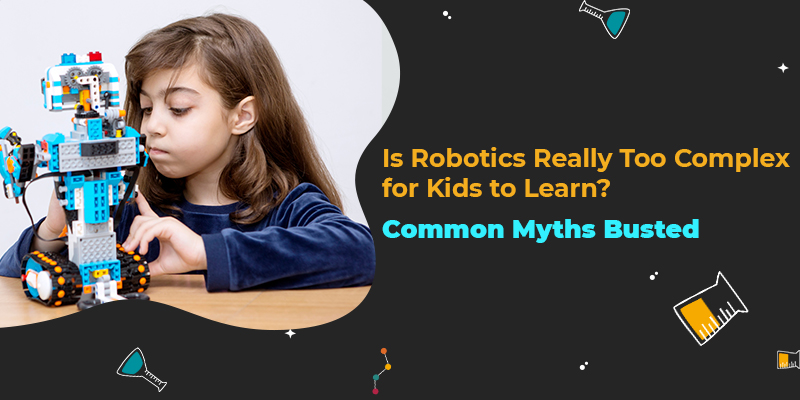
At first, robotics might seem a bit overwhelming for parents. It sounds technical and serious, which naturally raises questions, especially if you imagine coding screens and complicated machines. However, before making up your mind on robot camps for kids, take a look at some myths and see what kids can actually do with robotics.
- Myth 1: Robotics Is Too Hard for Kids
Say “robotics” and many people picture big machines, code on screens, and lab coats everywhere. It can feel like it’s way over a kid’s head. The truth? Kids can dive in with basic robot kits and learn by just playing around.
Why it works:
- They pick things up by trying them out rather than memorizing instructions.
- Every little win makes them more curious and confident.
- It ends up feeling like play instead of homework.
Robotics is about curiosity. Kids experiment, and if something doesn’t work, they adjust. Everything eventually clicks. There’s no reason to start with complicated projects. Starting with little things helps them see that they can do it.
- Myth 2: Robotics Is Just About Coding
Everyone assumes that robotics is all about coding and complex programs. That’s not true. Kids get to create, build, and solve problems. They build their ideas and see them in action.
Designing a robot teaches spatial thinking and planning. When kids adjust parts, they practice figuring things out and learning from mistakes. Working with robots also helps children practice real problem-solving. They work with balance, motors, and materials while learning basic engineering and physics.
Robotics gives children the chance to combine imagination with science. It’s where their ideas can literally come to life.
You May Like: How Do STEM Summer Camps Turn “I Can’t” Into “Let Me Try”?
- Myth 3: Robotics Is Too Expensive
Lots of parents think robotics is too expensive to start, but that’s not the case. They picture big kits, complicated tools, and a huge bill. That can be intimidating. In reality, kids do not need all that to begin with.
You would be surprised how much they can do with simple materials. Cardboard, a small motor, a couple of batteries, and suddenly something moves. That moment alone is exciting. It does not have to look fancy to teach something meaningful.
- Myth 4: Robotics Is Only for Boys
Robotics is open to every child, no matter their gender. Girls can be just as curious and capable as boys, especially when they get encouragement early. Simple hands-on activities and a supportive environment help all kids grow confidence, problem-solving skills, and creativity. Everyone can enjoy building, designing, and testing robots while picking up skills that last.
- Myth 5: Robotics Won’t Help My Child in the Future
Many parents think robotics is just a passing phase for kids. That is fair. New things come up all the time. The difference is that what children pick up from robotics is not tied to the robot itself. They learn how to work through problems, how to share ideas, and adjust when something fails. Those are life skills. It does not really matter what career they choose later; they will still use them.
How to Make Robotics Fun and Engaging
Making robotics exciting is all about hands-on experiences and celebrating every milestone. Here are a few ways to keep kids motivated:
- Let them play around with it and see what happens instead of stepping in too quickly.
- Notice the little things they get right and actually point them out.
- Set up a quick challenge, maybe weaving around objects or timing how fast it can move across the floor.
- Combine play with learning so they do not even realize how much they are picking up.
When children enjoy the process, they stay curious and engaged, and their skills grow naturally.
Why Starting Early Matters
When children are introduced to robotics early on, the benefits really do stick with them. They press a button, connect a wire, or fix something that is not working. That is where the real learning happens. Instead of looking for guidance, they start testing solutions themselves. As the projects get bigger, so does their confidence.
Over time, the focus shifts away from the robot itself. It becomes about not giving up when something doesn’t work and enjoying the moment when it finally does. Those kinds of lessons stay with them way beyond the classroom.
Conclusion
Robotics really is not as complicated or intimidating as it sounds. Children pick it up faster than we expect, especially when they are allowed to play, test things out, and even make mistakes. That is why robot camps for kids work so well. It turns learning into something hands-on and exciting, rather than overwhelming. Along the way, they build confidence, think more creatively, and learn how to solve problems on their own.
If you are curious to see how your child might enjoy it, Super Science for Kids is a great place to start. Reach out and see what they can discover!
Frequently Asked Questions
- When is the right age for kids to start learning robotics?
Kids can start exploring robotics as early as five with simple visual coding tools like Blockly. At Super Science for Kids, we make learning playful and exciting while building curiosity and problem-solving skills. - Is robotics only for children aiming for STEM careers?
Not at all! Robotics helps kids develop problem-solving skills, spark creativity, and learn teamwork, which are valuable in any career or field. - How can robotics be made fun and engaging for kids?
At Super Science for Kids, we make robotics hands-on and interactive through real-world projects, experiments, and challenges. Children get to explore, create, and celebrate every success, making learning both fun and meaningful.

Leave a Reply